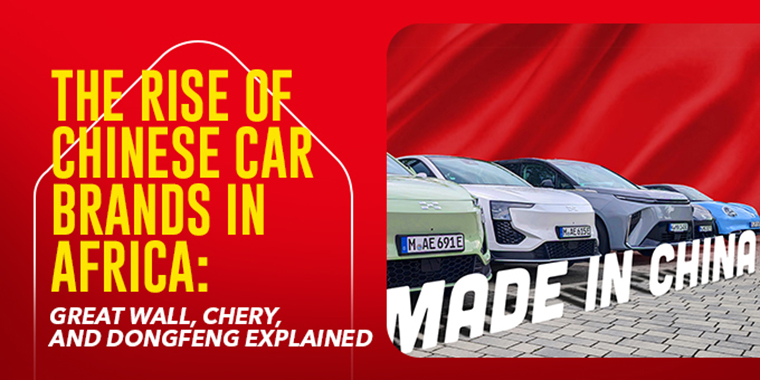
Over the past decade, Africa’s automotive market has undergone a quiet but powerful transformation. While Japanese and European brands once dominated showrooms and import yards, Chinese car manufacturers have steadily carved out their own space. Today, names like Great Wall, Chery, and Dongfeng are no longer unfamiliar. Instead, they are becoming everyday choices for drivers who want modern cars at realistic prices.
So, what exactly is driving this shift? And more importantly, why are African buyers increasingly trusting Chinese vehicles for daily commuting, business use, and family travel?
Let’s explore how these brands rose to prominence, what they offer, and why their momentum continues to grow across the continent.
Africa’s Changing Automotive Landscape

For years, Africa has been a stronghold for used Japanese imports and rugged European workhorses. However, times are changing. Urbanization is accelerating, middle-class populations are expanding, and infrastructure is improving. As a result, more people now want brand-new vehicles with modern features, warranty coverage, and affordable financing.
At the same time, global supply chains have shifted. Chinese manufacturers have invested heavily in production capacity, logistics, and regional partnerships. Consequently, they can deliver vehicles faster and at lower costs than many traditional brands.
In addition, African governments are encouraging local assembly plants. Therefore, Chinese brands are setting up factories in countries such as South Africa, Egypt, Nigeria, and Kenya, thereby further reducing prices and improving availability.
Simply put, the market is ready, and Chinese brands are perfectly positioned to meet that demand.
Why Chinese Cars Are Winning Over African Buyers
Before diving into individual brands, it’s important to understand why Chinese vehicles are gaining so much traction across Africa.
1. Competitive Pricing without Cutting Corners
First and foremost, affordability is a major factor. Chinese manufacturers design cars specifically for cost-sensitive markets. However, they don’t compromise on essential features.
Today’s Chinese cars come with:
- Touchscreen infotainment systems
- Reverse cameras and parking sensors
- Digital instrument clusters
- Advanced safety features
- Fuel-efficient engines
As a result, buyers get modern technology at a price point that many Japanese and European brands simply can’t match.
2. Built for African Roads
Secondly, Chinese brands understand African driving conditions. From rough rural roads to congested city streets, their vehicles are engineered with high ground clearance, reinforced suspension, and durable components.
Moreover, many models are tested in similar developing markets, which means they perform well in hot climates, dusty environments, and long-distance driving.
3. Expanding Dealer Networks and Spare Parts
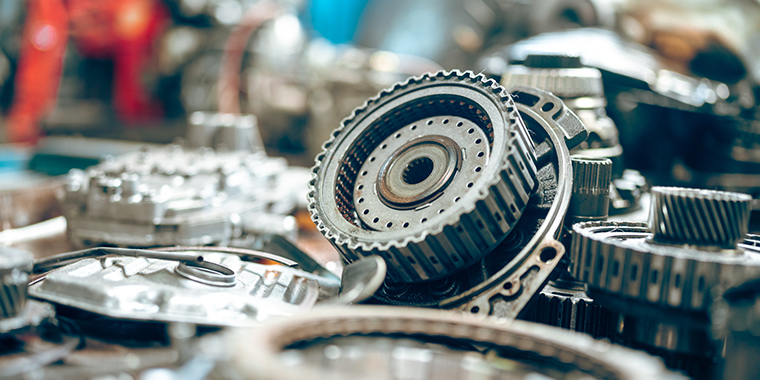
In the past, spare parts availability was a concern. However, that is rapidly changing. Chinese brands now have official dealerships, service centers, and parts warehouses across major African cities.
Therefore, maintenance is no longer a headache. In fact, parts are often cheaper and more readily available than for older imported vehicles.
Great Wall Motors: The Pickup and SUV Powerhouse
Great Wall Motors (GWM) is one of China’s most successful automotive exports. Founded in 1984, the company initially focused on pickups and SUVs. Over time, it became a global leader in utility vehicles.
Today, Great Wall operates in more than 170 countries and has assembly plants in South Africa and other African markets.
Popular Great Wall Models in Africa
Great Wall Wingle Pickup
The Wingle pickup has become a favorite among farmers, contractors, and small business owners. It offers:
- Strong diesel engines
- High payload capacity
- Durable ladder-frame chassis
- Excellent fuel economy for its size
As a result, it competes directly with the Toyota Hilux and Isuzu D-Max at a much lower price.
Haval H6 and Jolion
Under its Haval sub-brand, Great Wall has launched stylish urban SUVs that appeal to younger drivers and families. The Haval H6, in particular, is now one of the best-selling SUVs in several African markets.
With its premium interior, turbocharged engine, and modern design, it feels more expensive than it actually is.
Chery: The Technology-Driven Brand
Chery Automobile was founded in 1997 and quickly became one of China’s largest passenger car exporters. However, unlike some competitors, Chery focuses heavily on research and development. In fact, it operates multiple global R&D centers in Europe, South America, and Asia.
This focus on innovation is clearly visible in its vehicle lineup.
Chery’s Growing Presence in Africa
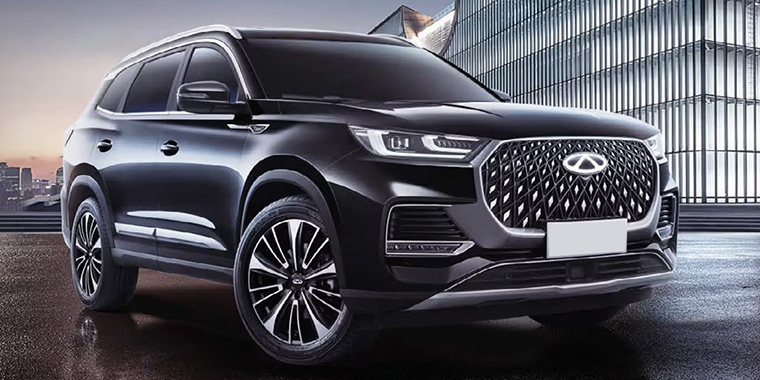
Chery has expanded rapidly across North Africa, Southern Africa, and parts of East Africa. Through partnerships with local distributors, the brand now offers competitive warranty packages and after-sales support.
Popular Chery Models in Africa
Chery Tiggo Series
The Tiggo SUVs have become Chery’s strongest sellers. Models like the Tiggo 2, Tiggo 7 Pro, and Tiggo 8 Pro offer:
- Turbocharged engines
- Premium interior finishes
- Large infotainment displays
- Advanced driver-assistance systems
Moreover, they compete directly with the Toyota RAV4, Nissan X-Trail, and Hyundai Tucson.
Chery Arrizo 5e
Chery is also making moves in the electric vehicle segment. The Chery Arrizo 5e is a fully electric sedan designed for urban mobility. It offers smooth acceleration, low running costs, and zero emissions.
In cities where fuel prices are rising and charging infrastructure is expanding, this model presents a compelling alternative to traditional petrol sedans.
As African countries push for cleaner transportation, the Chery Arrizo 5e could become a key player in the continent’s EV future.
Dongfeng: The Industrial Giant
Dongfeng Motor Corporation is one of China’s largest and oldest automotive manufacturers. Founded in 1969, Dongfeng started as a commercial vehicle producer and later expanded into passenger cars.
Today, Dongfeng builds trucks, buses, SUVs, sedans, and electric vehicles. It also has joint ventures with global brands such as Nissan, Honda, and Peugeot.
Dongfeng’s Strength in Africa
Dongfeng has a strong presence in logistics, construction, and public transport sectors. Governments and transport companies across Africa widely use its trucks and buses.
However, its passenger vehicles are also gaining attention.
Popular Dongfeng Models in Africa
Dongfeng Rich Pickup
The Rich pickup is built in partnership with Nissan and shares many mechanical components with the Navara. It offers:
- Proven engine technology
- Strong off-road capability
- Excellent durability
Therefore, it appeals to buyers who want Japanese reliability at a more affordable price.
Dongfeng SUVs and Sedans
Dongfeng’s Glory and Fengon SUV lineup is also expanding in Africa. However, these models focus on family comfort, modern styling, and value-for-money features.
How Chinese Brands Compare to Japanese and European Cars
Naturally, many buyers still compare Chinese cars to long-established brands. While Japanese cars remain known for reliability, Chinese brands now compete strongly on:
- Warranty coverage (often 5 to 7 years)
- Standard features
- Modern design
- Lower purchase prices
Furthermore, Chinese vehicles continue to improve with every new generation. Build quality, safety ratings, and long-term durability are rising rapidly.
Therefore, the gap is closing faster than many people expected.
Final Thoughts
In conclusion, the rise of Chinese car brands in Africa is not a passing trend. Instead, it represents a fundamental shift in how Africans buy and use cars.
Great Wall delivers rugged pickups and stylish SUVs for work and family life. Chery brings cutting-edge technology and electric mobility, while Dongfeng offers industrial strength and dependable transport solutions.
Together, these brands are redefining what affordable mobility looks like across the continent.
For African buyers, this means more choice, better technology, and greater value for money. And for the automotive industry, it marks the beginning of a new era, one where Chinese brands stand confidently alongside the world’s biggest names.
In short, the road ahead belongs to those who innovate, adapt, and listen to the needs of real drivers. And right now, Chinese car brands are doing exactly that.