Africa’s used car market has been expanding at a remarkable pace over the past decade. As local demand for affordable and reliable vehicles increases, importers are shifting their attention to global auto hubs, such as the United Arab Emirates (UAE) and China.
Both nations have become crucial suppliers for African dealers and private buyers alike. However, each source offers distinct advantages and a few challenges that can make or break an importer’s business strategy.
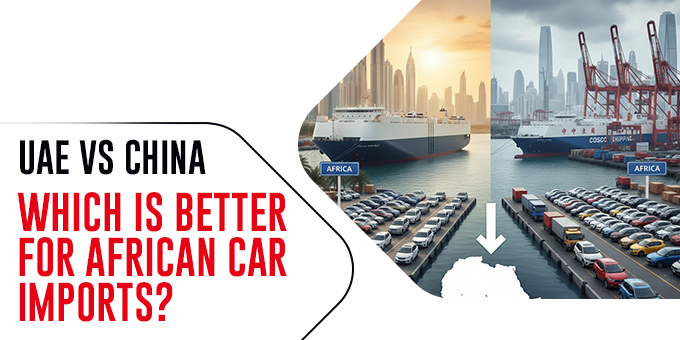
In this blog, we’ll break down how the UAE and China compare in terms of pricing, vehicle quality, logistics, spare parts, and long-term value. By the end, you’ll have a clear understanding of which market aligns best with Africa’s import needs in 2025 and beyond.
The UAE: Africa’s Trusted Gateway for Used Cars
When it comes to vehicle exports to Africa, the UAE, especially Dubai and Sharjah, has earned a sterling reputation. The used cars from UAE industry have been built around transparency, variety, and global standards.
High-Quality Re-Exports
The UAE doesn’t manufacture cars, but it re-exports vehicles from Japan, the United States, and Europe. This means African buyers often find high-spec, low-mileage cars in excellent condition. Many vehicles come with comprehensive service histories, verified mileage, and certifications that enhance trust and increase their resale value.
Moreover, cars sold in the UAE market typically meet GCC (Gulf Cooperation Council) standards, designed for hot climates and harsh terrains, an advantage that resonates well with African road conditions.
Ease of Access and Logistics
Another major benefit is logistics. The UAE’s ports, particularly Jebel Ali, are among the most efficient in the world. African importers can easily ship vehicles to ports in Kenya, Tanzania, Ghana, and Nigeria within relatively short transit times.
Additionally, the country’s business-friendly regulations make the entire process, from purchase to export, smooth and efficient. Many UAE exporters also provide documentation support, financing options, and inspection services, which simplify the buying process for African dealers.
Brand Variety and Market Reputation
From Toyota and Nissan to BMW and Mercedes-Benz, the UAE’s car market covers every segment imaginable. Buyers can find Japanese reliability, European sophistication, or American muscle, all in one marketplace.
This diversity attracts African importers seeking to cater to diverse consumer bases, ranging from budget buyers to luxury seekers. Over time, this broad selection has made the UAE a preferred hub for established dealers who value consistency and reliability.
China: The Fast-Rising Contender
China’s automotive footprint in Africa has grown dramatically in recent years. What was once a market dominated by Japanese and European re-exports now sees strong competition from brand-new Chinese vehicles.
Affordable New Options
The most striking advantage of importing used cars from China is the price. Chinese automakers, including Changan, BYD, Geely, and Great Wall Motors, have achieved cost efficiency without compromising quality. Their vehicles are priced far lower than new Japanese or European models, making them highly appealing to budget-conscious African consumers.
Furthermore, Chinese manufacturers are offering newer models with modern features, touchscreen infotainment systems, hybrid systems, and safety enhancements, at prices comparable to those of older used imports. This is reshaping how African buyers view value for money.
Growing After-Sales Support
One of China’s biggest improvements has been its commitment to after-sales service. In major African markets, including Kenya, Nigeria, South Africa, and Egypt, Chinese automakers have established dealerships, service centers, and parts distribution networks.
This infrastructure alleviates the traditional concern of poor maintenance support, a factor that once deterred buyers from opting for Chinese vehicles. Today, finding spare parts or qualified technicians for Chinese brands is becoming easier than ever.
Electric Vehicles and Innovation
China is also leading the way in affordable electric vehicles (EVs). With the global shift toward sustainability, African nations are starting to explore hybrid and electric options. Chinese EVs, such as BYD Dolphin or Chery EQ1, offer an accessible entry point into green mobility.
For importers seeking to get ahead of the trend, China’s EV offerings present a clear opportunity to tap into the continent’s emerging clean energy market.
Comparing Costs and Profit Margins
When it comes to financial planning, importers must weigh not only purchase prices but also shipping costs, taxes, and resale potential.
Initial Cost: Cars from the UAE often cost more upfront since they’re re-exports from premium markets. However, their quality and brand recognition can justify higher resale prices.
Chinese Advantage: Chinese cars are generally more affordable to purchase and ship. For first-time importers or dealers targeting entry-level buyers, the lower cost makes them an attractive choice.
Resale Value: Vehicles from established brands, such as Toyota, Nissan, or Honda, tend to retain their value better than newer Chinese models. Nonetheless, as Chinese brands gain trust, their depreciation rates are slowly improving.
Ultimately, your target market decides your profit margins. If your customers prioritize affordability, Chinese imports may be a better option. However, if reliability and brand prestige are the top priorities, the UAE remains the stronger option.
Quality, Reliability, and Buyer Confidence
Quality is often the deciding factor for long-term success in the import business.
UAE Vehicles: Proven Track Record
Cars sourced from the UAE are typically well-maintained and built to last. Since most UAE imports come from Japan or Europe, buyers are familiar with their performance and the availability of spare parts. These vehicles tend to inspire more buyer confidence, especially among repeat customers.
China’s Growing Reliability
On the other hand, Chinese automakers have rapidly improved their engineering and design. Modern Chinese cars now offer impressive warranties, better materials, and global safety certifications. While they haven’t yet matched the reputation of Japanese vehicles, their progress is undeniable.
For markets where affordability outweighs brand loyalty, the reliability gap is narrowing quickly.
Spare Parts and Maintenance
After-sales support plays a crucial role in sustaining any import business.
In the UAE, spare parts for major brands are readily available. The availability of genuine and aftermarket parts ensures minimal downtime for repairs, keeping customers satisfied and loyal.
In China, the parts network has expanded, but it still varies from country to country. For example, Kenya and Nigeria have established Chinese parts distributors, while smaller markets may still face occasional delays.
However, the growing partnership between Chinese automakers and African governments promises steady improvement in local parts supply chains over the next few years.
Which Is Better for Africa’s Future Imports?
Both markets bring valuable strengths to the table.
Choose the UAE if you prioritize vehicle quality, established brands, and a reputation for customer trust. It’s ideal for importers dealing in mid-to-high-end vehicles or catering to clients who prefer Japanese or European standards.
Choose China if you’re targeting affordability, new vehicles, or the emerging electric vehicle market. It’s a smart choice for first-time importers or those looking to diversify their inventory with modern yet budget-friendly models.
In many cases, savvy importers combine both sources, using the UAE for trusted brands and China for value-driven alternatives. This balanced approach helps them serve diverse customer segments while maximizing profit potential.
Final Thoughts
Africa’s automotive landscape is undergoing significant changes, and both the UAE and China are contributing to this transformation in distinct ways. The UAE continues to stand as a pillar of reliability, offering top-quality used cars and a seamless export process. Meanwhile, China’s innovation and affordability are rewriting the rules of what African buyers can expect for their money.
Choosing between the two ultimately depends on your market goals. Are you building a premium brand known for trust and longevity? The UAE might be your best bet. Are you entering a competitive market focused on affordability and modern features? Then China could give you a head start.
Whichever route you take, one thing is clear: the future of Africa’s car import market will thrive on smart choices, strong partnerships, and adaptability to evolving consumer needs.