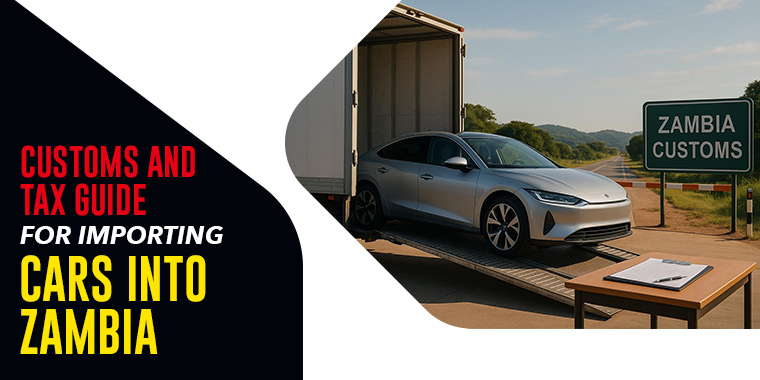
Importing a car into Zambia has become increasingly popular, especially among buyers seeking better prices, wider choices, and more reliable vehicle histories than they can find locally. Imported cars for sale in Zambia offer an excellent opportunity, but the process also entails customs rules, tax obligations, and documentation requirements that every importer must understand. When you know how the system works, you avoid surprises, budget accurately, and move through clearance quickly.
This guide breaks everything down in a simple, practical way. From calculating taxes to understanding age limits and required paperwork, here’s everything you need to know before your next import.
Understanding Zambia’s Car Import Regulations
Before you dive into taxes, it helps to understand the import landscape. Zambia allows the importation of both new and used vehicles from countries such as Japan, the UK, South Africa, Singapore, and the UAE. Yet, the country also sets rules to ensure vehicle safety, protect consumers, and maintain fair trade.
Age Limit Rules
Zambia does not impose a strict age limit on used imports, unlike some neighboring countries. Still, older cars are subject to higher excise duty rates, meaning your tax bill increases as the car ages. However, because of this, many buyers avoid vehicles older than 10 years unless the purchase price is extremely low.
Inspection Requirements
While Zambia generally accepts vehicles without pre-shipment inspection, importing from Japan or Singapore with a reliable inspection certificate is smart. These reports verify mileage, grade, chassis condition, and accident history. Moreover, they help smooth customs clearance, as officers can trust the documentation.
Ports of Entry
Most imported cars enter through:
Durban, South Africa: The most common route
Dar es Salaam, Tanzania: Alternative Northern route
Walvis Bay, Namibia: Quick and reliable for buyers in Western Zambia
However, regardless of the port, the final clearance always takes place at a Zambia Revenue Authority (ZRA) Customs office.
Overview of Taxes and Fees When Importing a Car

Now, let’s move into the part that matters most: the cost of clearing your vehicle in Zambia. Many buyers underestimate taxes, resulting in delays or over-budget imports. However, to avoid that, here is a clear breakdown of the taxes you’ll pay.
Zambia applies four primary charges on imported vehicles:
- Customs Duty
- Excise Duty
- Value Added Tax (VAT)
- Carbon Emission Surtax
Together, these make up your total Customs bill.
Customs Duty: The Foundation of Your Import Cost
Customs duty is the first tax applied when your vehicle arrives in Zambia. The rate depends on the vehicle's type and purpose.
Customs Duty Rates
Sedans and small passenger cars: 25% of CIF value
Station wagons and SUVs: 30%
Pickups, buses, and commercial vehicles: 15%–25% depending on tonnage
Trucks and heavy-duty vehicles: Rates vary by classification
Moreover, because duty is calculated on the CIF value (Cost + Insurance + Freight), your shipping cost directly affects your duty amount.
What You Should Know
However, if you want to reduce your customs duty, look for vehicles with moderate CIF values. For example, expensive trims, large engines, and luxury features raise the base value and increase your duty.
Excise Duty: Age and Engine Size Matter
After customs duty, ZRA applies excise duty, which often becomes the largest portion of the total tax bill. However, this duty is intended to discourage older, high-emission vehicles from entering the market.
Excise Duty Rates Based on Engine Capacity
- Up to 1,500cc: 20%
- 1,501cc – 2,500cc: 30%
- 2,501cc – 3,000cc: 40%
- Above 3,000cc: 50%
Excise duty is calculated on CIF value + Customs duty. Because of this, even a small jump in engine size can significantly increase your total tax.
Why Age Matters
Although Zambia doesn’t prohibit older vehicles, excise duty on older units is effectively increased because their CIF value is adjusted using depreciation formulas. That means older vehicles sometimes get “uplifted” values to prevent undervaluation.
VAT (Value Added Tax): The Final Major Tax
Once Customs and excise duties are calculated, VAT is added at 16%.
VAT is charged on: CIF value + Customs duty + Excise duty
That means VAT compounds onto previous taxes, so even small increases in earlier charges raise your final VAT bill.
Tip to Manage VAT Costs
Choose a vehicle with a clean import invoice. When the CIF value is transparently documented, Customs officers are less likely to challenge or revise your valuation upward.
Carbon Emission Surtax: Small but Important
Zambia also charges a carbon emission surtax. Although it’s smaller compared to other taxes, you should still include it in your budget.
Typical Surtax Ranges:
Sedans: K50–K150
SUVs and pickups: K150–K450
Large engine vehicles: Can go beyond K600

However, this tax is meant to encourage environmentally responsible choices. So, if you’re importing a hybrid or fuel-efficient car, this fee remains minimal.
How ZRA Calculates Your Import Taxes
To make import taxes predictable, the Zambia Revenue Authority uses a structured calculation method. Here’s the typical formula:
- Determine CIF value
- Apply Customs duty (%)
- Add excise duty (%)
- Apply VAT (16%)
- Add carbon emission surtax
- Add port charges and handling fees
Example Calculation (Simplified)
Let’s say you import a 2015 Toyota Corolla with a CIF value of $5,000.
Customs Duty (25%): $1,250
Excise Duty (20% on CIF + Duty): 20% of $6,250 = $1,250
VAT (16% on CIF + Duty + Excise): 16% of $7,500 = $1,200
Carbon Surtax: approx. K150
Total estimated taxes: ~$3,700 plus local port fees.
This example shows why total import charges often come close to, or even exceed, the CIF value.
Required Documentation for Clearing Your Car
To clear your vehicle without delay, gather all required documents in advance. Missing paperwork often leads to fines or extended port storage fees.
Essential Documents
- Original Bill of Lading
- Export certificate / Deregistration document
- Purchase invoice
- Insurance certificate
- Police clearance (in some routes)
- TPIN number (Taxpayer Identification Number) – mandatory
- Vehicle inspection report (optional but recommended)
Moreover, border agents rely heavily on proper documentation to verify the vehicle’s authenticity and prevent fraud.
Clearing Your Vehicle at ZRA: Step-by-Step

Although each case is slightly different, most importers follow the same clearance sequence.
Step 1: Submit documents to a clearing agent
Agents handle valuation, paperwork processing, and communication with ZRA.
Step 2: ZRA assesses your CIF value
They compare your invoice with their valuation database.
Step 3: Calculation of duty, excise, VAT, and surtax
Your agent receives the official assessment.
Step 4: Make payment
You can pay via bank transfer, mobile money, or direct deposit.
Step 5: Release order is issued
Once all payments clear, ZRA authorizes the release of the vehicle.
Step 6: Collect your vehicle from the border or bonded warehouse
Finally, you can drive the vehicle home or transport it using a car carrier.
Final Thoughts
In essence, importing a car into Zambia is a practical option for many buyers, especially if you want a reliable used vehicle from trusted markets like Japan. While the process involves several taxes and comprehensive paperwork, understanding how each charge applies helps you plan better and avoid unpleasant surprises.
Therefore, with the right information, a trustworthy clearing agent, and clean documentation, the process becomes manageable and even rewarding. In the end, a well-planned import can save you money, give you more vehicle choices, and deliver a car that fits your needs for years to come.