Importing a vehicle into Rwanda is an exciting milestone, whether you are upgrading your personal car or purchasing a business vehicle. However, navigating international logistics, customs declarations, and government duties can quickly feel overwhelming if you are unprepared. Many buyers find a great deal on online auction sites, only to be surprised by unexpected port charges, clearance fees, and tax calculations once the vehicle lands in East Africa.
Therefore, understanding how car import costs are structured in 2026 allows you to make informed decisions before spending dollars. Consequently, you can evaluate true landed costs and secure a reliable ride that fits your lifestyle and financial plan. In this guide, we break down every single component of the importation process, from calculating basic vehicle value to paying final registration fees in Kigali.
Understanding the CIF Base (Cost, Insurance, and Freight)

Before the Rwanda Revenue Authority (RRA) applies a single tax percentage, they must determine your vehicle's CIF value. CIF stands for Cost, Insurance, and Freight, representing the total baseline financial value of your car upon arrival at the port. Therefore, understanding this fundamental formula is essential because every major duty relies directly on it.
FOB (Free on Board): The initial price you pay to the overseas seller for the vehicle itself.
Freight Charges: The cost of shipping the vehicle on a Roll-on/Roll-off (RoRo) ship or inside a dedicated ocean container from ports in Japan, Europe, or the UAE to East African ports.
Insurance: The marine transit policy covering potential damage or loss during sea transit.
Furthermore, customs authorities do not rely strictly on the invoice price provided by online sellers. If the declared purchase price appears artificially low compared to standard market benchmarks, RRA valuation officers will adjust the valuation based on official depreciation schedules and global price databases. As a result, starting with a realistic, verifiable CIF estimate ensures your budget remains accurate throughout the import journey.
Breaking Down Mandatory Duties and Taxes in Rwanda
Once your vehicle's CIF value is officially established, several statutory taxes are applied in a specific sequence. Knowing how these layers interact helps you avoid miscalculating your final bill at the border.
|
Tax Type |
Rate / Basis |
Notes |
|
Customs Duty |
25% of CIF |
Standard East African Community (EAC) Common External Tariff. |
|
Infrastructure Levy |
1.5% of CIF |
Regional infrastructure development fee. |
|
Excise Duty |
0% – 15% (Engine displacement dependent) |
Varies by engine capacity (cc); smaller engines incur lower or zero rates. |
|
Value Added Tax (VAT) |
18% |
Applied to the cumulative total of (CIF + Customs Duty + Excise Duty). |
|
Withholding Tax (WHT) |
5% of CIF |
Advance income tax assessment for unregistered tax entities. |
Because VAT is calculated on top of prior duties rather than the bare CIF alone, the cumulative tax burden for conventional petrol or diesel passenger vehicles usually falls between 45% and 65% of the initial CIF value. Consequently, keeping your initial purchase choices efficient is the single best way to limit total tax exposure.
Why the Suzuki Swift Compact Hatchback Remains an Import Favorite
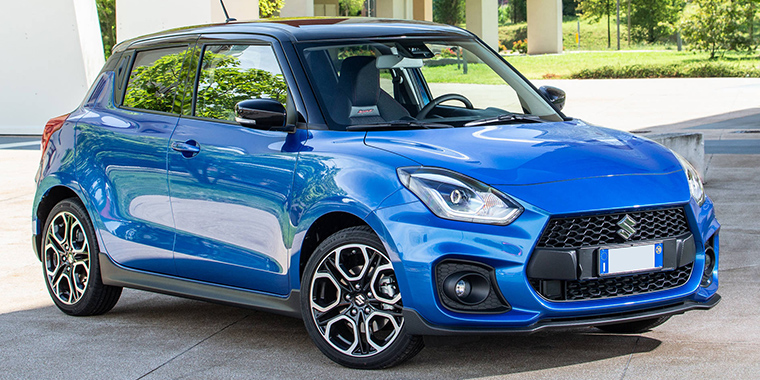
When managing total import charges, selecting the right vehicle model makes a massive difference in your final financial commitment. This is precisely why the Suzuki Swift Compact Hatchback continues to be one of the most popular vehicles imported into Rwanda every single year.
The Suzuki Swift Compact Hatchback typically features an engine displacement ranging between 1.2 liters and 1.4 liters. Because Rwandan excise tax categories scale upward alongside engine size, importing a smaller-capacity car keeps your excise duty minimal or even zero. Furthermore, the modest overall purchase price (FOB) of a Suzuki Swift Compact Hatchback keeps the foundational CIF value low, which inherently suppresses every subsequent tax percentage applied down the line.
Beyond tax advantages, the Suzuki Swift Compact Hatchback delivers outstanding fuel efficiency and incredible maneuverability through Kigali’s urban traffic. Selecting a practical, small-engine hatchback like the Suzuki Swift Compact Hatchback proves that smart vehicle selection is your strongest tool for controlling import expenditure.
Transit Logistics: Port Choice, Overland Transport, and Storage Fees
Rwanda is a landlocked nation. This means your imported vehicle must transit through a maritime gateway in a neighboring country before continuing inland. The two main ocean ports serving Rwanda are:
Mombasa, Kenya: The primary port along the Northern Corridor.
Dar es Salaam, Tanzania: The preferred port along the Central Corridor.
Shipping your car to Mombasa or Dar es Salaam incurs ocean freight costs, but the journey does not end there. You must account for transit clearance, port handling, and overland transport fees to move the car from the coast across border posts like Rusumo or Gatuna and finally into a bonded warehouse (MAGERWA) in Kigali.
Additionally, port storage fees can accumulate rapidly if documentation delays occur overseas. Therefore, working with an experienced clearing agent ensures transit documents are processed smoothly without your car incurring daily demurrage charges.
Clearing, Inspection, and Final Registration Costs
When your car reaches a customs-bonded warehouse in Rwanda, the local clearance process begins. Beyond the main government tax assessment, several mandatory administrative fees must be cleared before receiving your local license plates.
Customs Brokerage Fees: Licensed clearing agents charge a service fee to prepare paperwork, submit RRA declarations, and handle physical inspections.
Bonded Warehouse Storage (MAGERWA): Daily storage fees billed while your vehicle awaits physical customs verification and clearance approval.
Control Technique (Vehicle Inspection): A mandatory technical and safety evaluation conducted by the Rwanda National Police to ensure roadworthiness and emission compliance.
Yellow Card & Plate Registration: The cost of issued local registration plates, logbook (carte jaune), and mandatory third-party road insurance.
Planning for these localized administrative items avoids last-minute cash flow bottlenecks right when your vehicle is ready to hit the road.
Practical Tips to Streamline Your Import Journey
While importing a vehicle requires careful attention to detail, following proven steps eliminates unnecessary stress and protects your wallet.
Verify Export Documents Early: Ensure your seller provides the original Bill of Lading, export certificate, deregistration notice, and invoice immediately upon shipment.
Check Age Restrictions & Standards: Verify that the vehicle meets local Rwanda Standards Board (RSB) regulations and drive-side compliance (Right-Hand Drive vs Left-Hand Drive laws).
Work with Licensed Agents: Engage a reputable clearing agent registered with the Rwanda Revenue Authority before the ship docks at the port.
Pre-Fund Your Tax Account: Have your duty funds liquid so you can settle RRA assessments the moment they are generated, avoiding MAGERWA storage penalties.
Conclusion
Importing a car into Rwanda in 2026 does not have to be a confusing or nerve-wracking process. By understanding the import costs, you can calculate your total landed budget down to the last franc before ever placing an order.
Choosing an efficient vehicle like the Suzuki Swift Compact Hatchback keeps your foundational import costs low. Moreover, it is a fuel-friendly vehicle perfect for everyday driving. Armed with the right information and reliable partners, you can navigate customs confidently and enjoy the excitement of driving your newly imported car home.