If you have spent any time navigating the bustling streets of Cairo or the coastal roads of Alexandria, you would know exactly how reliable a Toyota Yaris is. It is compact enough to squeeze into a limited parking space and sturdy enough to handle the occasional pothole or speed bump.
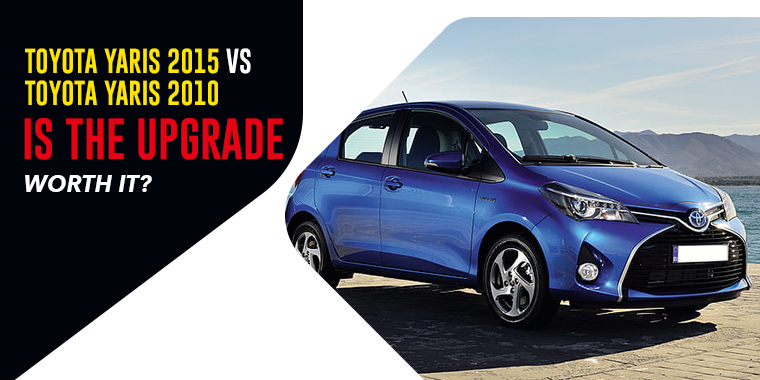
However, when you are browsing listings on platforms like SBT Japan, you often find yourself at a crossroads. You might see a pristine 2010 Batta (the beloved nickname for the second generation) sitting next to a sleeker 2015 third-generation model. The price gap in today’s market is significant, often reaching several hundred thousand Egyptian Pounds. This brings us to the ultimate question: is the jump from the 2010 model to the 2015 version actually an upgrade, or are you just paying for a prettier face? Let’s find out.
Design and Curb Appeal: The Batta vs. the Shark
First impressions matter, especially when you are investing your hard-earned savings. The 2010 Toyota Yaris is famous for its rounded, bubbly aesthetic. It’s friendly, unassuming, and has aged remarkably well.
In contrast, the 2015 Toyota Yaris underwent a significant maturity boost. The front grille is more aggressive, the lines are sharper, and it generally looks like a more expensive car. All in all, if you like making a statement on the road, the 2015 model is the clear winner here.
Interior Comfort and Cabin Experience: Function vs. Form
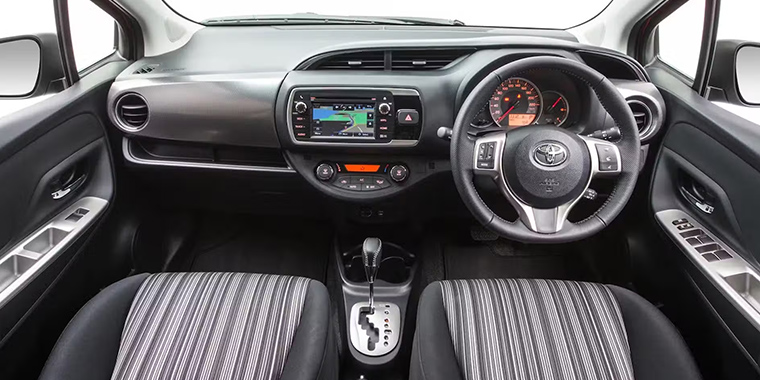
When you step inside a vehicle, you aren't just looking at a dashboard; you are looking at your second home during those long hours stuck in traffic. This is perhaps where the two generations diverge the most significantly. The transition from the 2010 to the 2015 model represents a complete shift in Toyota’s design philosophy regarding what a budget interior should feel like.
The 2010 Yaris: Quirky and Spacious
The 2010 Toyota Yaris interior is famous for its love it or hate it center-mounted instrument cluster. By placing the speedometer in the middle of the dash, Toyota created a massive storage bin directly in front of the driver. If you carry multiple phones, wallets, and water bottles, you will find the 2010 model surprisingly practical. The cabin feels airy because the dashboard is pushed forward, providing an illusion of extra space. However, the materials are old-school plastic, durable, and easy to clean, but definitely lacking a premium feel.
The 2015 Yaris: A Modern Evolution
By comparison, the 2015 Toyota Yaris feels like a significant upgrade. Toyota listened to global feedback and returned the gauges to the traditional position behind the steering wheel, which most Egyptian drivers find much more intuitive. The dashboard design is more horizontal and elegant, often featuring better textures and even stitched effects on the plastic to mimic leather.
Furthermore, the seating in the 2015 model offers better lateral support. If you are driving for two hours straight, your back will likely thank you for choosing the newer model. Additionally, the noise, vibration, and harshness (NVH) levels are noticeably lower in the 2015 version. In the 2010 model, you hear quite a bit of the engine’s growl and the hum of the tires on the asphalt. In the 2015 model, the cabin is better insulated, allowing you to enjoy your music or a conversation without shouting over the wind.
Rear Passenger Space and Trunk Utility
While both cars are compact, the 2015 model utilizes its slightly longer wheelbase to offer better legroom for rear passengers. If you frequently have friends or family in the back seat, the 2015 feels less cramped. That being said, the 2010 model's flat floor in the back is a legendary feature, making it easier for a third person to sit in the middle without fighting for foot space.
In short, if you want a cabin that feels functional and indestructible, the 2010 is your friend. But if you want a space that feels like a modern car where you can actually relax during a commute, the 2015 interior is a major leap forward.
Engine Performance and Fuel Economy in Egypt
In the local market, both of these cars typically come equipped with the 1.3L VVT-i engine. On paper, the performance is almost identical, delivering around 84-90 horsepower. Because the 2015 model is slightly heavier due to its larger dimensions and added safety features, the 2010 model can actually feel a bit peppier and more agile in heavy traffic.
However, we need to talk about the 92 Octane factor. Both cars are remarkably efficient, but the 2015 model benefited from slight tweaks in aerodynamics and transmission mapping. While the 2010 model is a fuel-sipping champion, the 2015 version offers a more composed ride at highway speeds, think Cairo to North Coast. If your daily commute involves the Ring Road or the Mehwar, the 2015’s improved stability and noise insulation make a positive difference in your stress levels.
The Reality of Maintenance and Spare Parts
One of the biggest reasons Egyptians buy Toyota is the easy availability of parts.
Toyota Yaris 2010: Parts are everywhere. From El Herafeyeen to the smallest shops in Upper Egypt, you will find both original and high-copy parts at very accessible prices. Since the car is mechanically simpler, any local mechanic can fix it with their eyes closed.
Toyota Yaris 2015: Parts are also widely available, but they are undeniably more expensive. The body parts, such as headlights, bumpers, and side mirrors, cost significantly more than the 2010 equivalents.
Furthermore, you must consider the hidden costs. A 2010 model is now 16 years old. Even with Toyota’s legendary reliability, you are looking at inevitable repairs: suspension bushings, radiator hoses, and perhaps a transmission refresh. The 2015 model, being five years younger, generally has more life left in its rubber components and electronics.
Safety Features: A Critical Step Up
Safety is often overlooked in the used car market, but it shouldn't be. The 2010 Yaris was basic. While many Egyptian trims came with two airbags and ABS, the structural rigidity of the 2015 model is vastly superior.
By 2015, Toyota had reinforced the chassis and improved the crumple zones. So, if you are buying a car for a small family or as a daily driver for a student, the peace of mind offered by the newer safety standards in the 2015 model is a strong argument for the higher price tag.
Resale Value: The Egyptian Gold Mine
In Egypt, a car is not just a mode of transport; it is an asset. The 2010 Yaris has reached its price floor, meaning it likely won't lose much more value as long as it is well-maintained. It is the safest place to park your money if you plan to sell it in a year.
On the other hand, the 2015 Toyota Yaris is currently in high demand. It hits the sweet spot for buyers who want something modern but cannot afford a brand-new car in the current economy. Therefore, while you spend more upfront, you are likely to find a buyer within 24 hours when you decide to sell.
The Final Verdict: To Upgrade or Not?
So, is the upgrade worth it?
Choose the 2010 Yaris if:
- You are on a strict budget and want the lowest possible running costs.
- You mainly drive in crowded city centers where bumps and scratches are inevitable.
- You prefer a mechanically simple car that is easy to maintain anywhere.
Choose the 2015 Yaris if:
- You spend significant time on highways and want a quieter, more stable ride.
- You want a modern interior and a car that still looks current.
- Safety and a younger odometer reading are priorities for you.
Ultimately, the 2015 Yaris isn't just a facelift; it’s a more refined, safer, and more comfortable vehicle. If your budget allows for the jump, the 2015 model offers a more complete driving experience. However, if you are looking for pure utility, the 2010 Batta remains an undefeated legend on Egyptian roads.