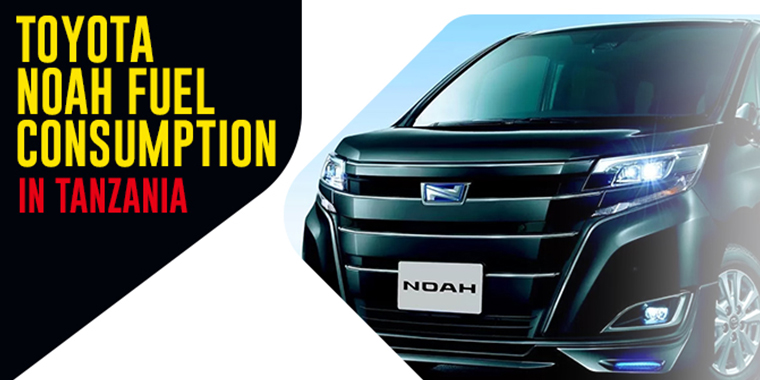
Navigating the Tanzanian automotive market requires a careful balance between practicality, space, and operating costs. For extended families, tour operators, and commercial business owners alike, the Toyota Noah has long been a go-to choice. However, with shifting fuel prices, understanding the exact fuel efficiency of this popular minivan is crucial before making a financial commitment.
When searching for a dependable family van or a business workhorse, looking for a high-quality used Toyota Noah in Tanzania is often the smartest route. Beyond the initial purchase price, the long-term cost of ownership is heavily dictated by how much fuel the vehicle consumes under local driving conditions. This guide breaks down everything you need to know about the Toyota Noah’s fuel economy. Moreover, we break down its mechanical variants and the specific Tanzanian import regulations you must navigate during your purchasing journey.
Understanding the Engine Variants and Official Mileage
To properly analyze the fuel economy of the Toyota Noah, we must first look at what lies beneath the hood. The vehicle is generally available in two primary configurations: the standard gasoline engine and the highly efficient hybrid powertrain.
The Standard 2.0-Liter Gasoline Engine
Most conventional gasoline models feature a 2.0-liter four-cylinder engine paired with a Super Continuously Variable Transmission (Super CVT-i). Under ideal test conditions, this powertrain achieves an official fuel consumption rate of approximately 14.8 km/L to 16.0 km/L. The two-wheel-drive (2WD) variants sit comfortably at the higher end of this spectrum. However, the four-wheel-drive (4WD) versions draw slightly more fuel due to the mechanical demands of the all-wheel drivetrain.
The 1.8-Liter Hybrid Powertrain
For buyers prioritizing maximum efficiency, the hybrid version introduces a 1.8-liter petrol engine. It combines an AC synchronous electric motor and a nickel-metal hydride battery pack. Utilizing an electric CVT (eCVT), the hybrid variant boasts an exceptional official fuel economy rating of up to 22.7 km/L to 23.8 km/L. Consequently, this variant drastically lowers weekly refueling costs for high-mileage drivers.
Real-World Fuel Economy on Tanzanian Roads
Official manufacturing figures may look impressive on paper. However, real-world driving conditions in East Africa present distinct challenges that alter these numbers. Local infrastructure, heavy traffic congestion, and terrain variations play a massive role in actual fuel usage.
|
Engine Variant |
Official Mileage (Drivetrain Dependent) |
Estimated Dar es Salaam Traffic Consumption |
Estimated Highway Consumption (e.g., Dar to Morogoro) |
|
2.0L Gasoline (2WD/4WD) |
14.8 – 16.0 km/L |
9.5 – 11.0 km/L |
13.0 – 14.5 km/L |
|
1.8L Hybrid (eCVT) |
22.7 – 23.8 km/L |
16.5 – 18.5 km/L |
19.0 – 21.0 km/L |
In heavily congested urban zones like Dar es Salaam, drivers experience frequent stop-and-go traffic. Under these conditions, a standard gasoline Noah will typically drop to between 9.5 km/L and 11.0 km/L. This drop occurs because idling and accelerating from a dead stop draw a heavy volume of fuel. Furthermore, running the air conditioning at maximum capacity to combat the coastal heat places an additional load on the engine.
Conversely, the hybrid model excels in heavy urban traffic. At lower speeds, the vehicle frequently relies purely on its electric motor, keeping the gasoline engine shut off entirely. Therefore, urban commuters can still achieve a remarkable 16.5 km/L to 18.5 km/L in gridlock.
On long, open highways such as the route from Dar es Salaam to Morogoro or Arusha, both models stabilize significantly. The gasoline variant climbs back up to 13.0 km/L to 14.5 km/L, while the hybrid delivers roughly 19.0 km/L to 21.0 km/L.
Key Factors That Influence Your Noah's Fuel Efficiency
Achieving an optimal fuel economy is not solely dependent on the car’s design. It is also heavily influenced by user behavior and vehicle maintenance. If you notice your fuel costs creeping upward, several distinct operational variables could be the culprit.
Vehicle Payload and Cargo Weight: The Toyota Noah is built to carry up to eight passengers comfortably. However, every additional 50 kg of weight added to the cabin reduces your overall fuel economy by roughly 2%. Overloading the vehicle with heavy commercial luggage or passenger baggage forces the engine to work much harder, resulting in a spike in fuel usage.
Aerodynamic Drag and Windows: Driving at speeds above 80 km/H with the windows rolled down creates substantial aerodynamic drag. In these instances, it is actually more fuel-efficient to roll up the windows and run the air conditioning, as the engine expends less energy overcoming wind resistance.
Mechanical Maintenance Habits: Neglecting routine service is a guaranteed way to ruin your mileage. Clogged air filters, worn-out spark plugs, and faulty oxygen sensors prevent the engine from burning fuel efficiently. Similarly, driving on underinflated tires increases rolling resistance, dragging down your kilometers per liter.
Navigating Tanzanian Car Import Regulations

When you are ready to purchase a used Toyota Noah in Tanzania, you cannot simply choose any vehicle available on international auction sites. The Tanzanian government enforces strict regulatory guidelines via the Tanzania Bureau of Standards (TBS) to ensure roadworthiness, environmental safety, and structural integrity.
Understanding these complex boundaries is essential to avoid heavy customs penalties or outright vehicle seizures at the Port of Dar es Salaam.
Passenger Vehicle Standards (Standard 7 to 8-Seater Models)
For standard passenger vans, the regulations focus heavily on vehicle age, weight, and general mechanical condition:
Age Limit: The vehicle must be less than 8 years old from its year of manufacture to avoid age-dumping penalties. To clear customs cleanly without steep excess excise taxes, aiming for a model that is ideally 6 years old or newer is highly recommended.
Weight Range: The gross vehicle weight for standard passenger imports must fall strictly within the 1,501 kg to 3,000 kg range, which perfectly accommodates the Noah's build profile.
Strict Prohibitions: The vehicle will be rejected if it displays any signs of odometer or meter tampering, structural rust, flood damage, or unrepaired accident distortions. Additionally, vehicles fitted with winter studless tires are strictly prohibited from entering the country.
Commercial and Utility Class Variations (Cargo / Panel Van Layouts)
If you are importing a modified Noah or a model specifically registered for commercial transport use, the regulatory landscape shifts slightly:
Age Limit: Commercial transport variants are granted an extended age limit of up to 10 years from the date of manufacture.
Specific Registration Window: For certain commercial classifications, the vehicle must align with strict manufacturing and registration year windows (such as a 2016 production model with a verified registration history within 2 years of manufacture).
Mandatory Inspection Standards: All commercial class units must successfully pass a mandatory ATJ (Automotive Technical Journal) inspection before departing from the source port.
Aesthetic Restrictions: While standard passenger cars can wear various factory paints, the Tanzanian customs authorities classify pink cars as unacceptable for commercial or utility imports. All standard restrictions regarding odometer tampering, rust, flooding, and studless tires apply identically to this category.
Conclusion
Ultimately, the Toyota Noah remains one of the most practical, reliable, and fuel-efficient mid-sized minivans available to Tanzanian drivers. By opting for a 1.8-liter hybrid model, you can significantly mitigate the financial impact of rising fuel prices, especially if your daily routines involve navigating heavy urban traffic.
Nevertheless, finding the right vehicle requires looking beyond the dashboard features. As you browse for a high-quality used Toyota Noah in Tanzania, always ensure that the specific unit fully complies with Tanzanian age limits, weight criteria, and mandatory pre-shipment inspections. Taking a diligent, well-informed approach to both fuel metrics and import compliance guarantees that your new investment will serve your family or business safely and affordably for many years to come.