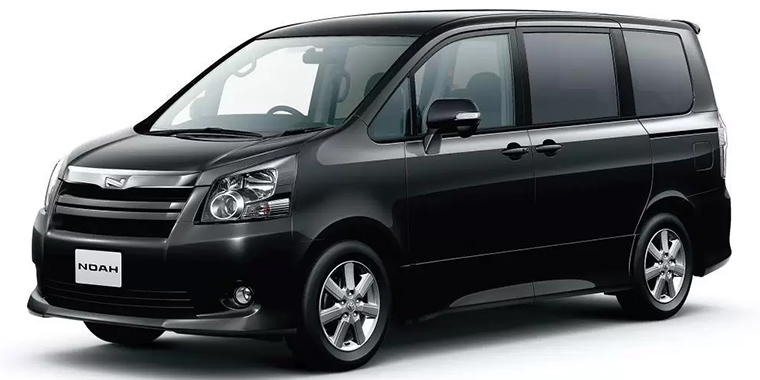
Choosing the right family vehicle or commercial passenger van in Tanzania is a massive financial commitment. You need space, but more importantly, you need a vehicle that will not empty your wallet at the fuel pump. Consequently, the Toyota Noah has become a dominant sight on the streets. From the crowded lanes of Kariakoo to the long stretches of the Morogoro road. But how does it actually perform when it comes to fuel economy? Moreover, is it truly the right match for your daily transport needs?
This comprehensive guide breaks down everything a buyer needs to know about the Toyota Noah. We will break down its real-world fuel consumption, pricing trends, safety technology, and overall comfort. Specifically, through the lens of Tanzanian road conditions and import regulations.
Real-World Fuel Consumption of the Toyota Noah
When you are browsing online car export platforms, you will see highly optimistic fuel economy numbers. However, real-world driving in Tanzania tells a slightly different story. This is primarily due to intense urban congestion and varying road qualities.
The Toyota Noah is typically available in two main configurations: a standard 2.0-liter gasoline engine with a Continuous Variable Transmission (CVT) and an ultra-efficient 1.8-liter hybrid model. Understanding the distinction between these two options is vital for predicting your monthly fuel budget.
|
Engine Variant |
Official Rating |
Estimated Rating |
Highway Rating |
|
2.0L Gasoline |
14.8 - 16.0 km/L |
9.5 - 11.0 km/L |
13.0 - 14.5 km/L |
|
1.8L Hybrid |
22.7 - 23.8 km/L |
16.5 - 18.5 km/L |
19.0 - 21.0 km/L |
In the stop-and-go traffic jams of Dar es Salaam, a standard gasoline-powered Noah drops significantly in efficiency. This drop happens because idling and constant low-speed acceleration burn a substantial volume of fuel. Conversely, the hybrid variant shines in heavy traffic. Because it uses its electric motor during low-speed crawling, it manages to maintain an incredibly respectable fuel economy even when you are barely moving.
What Affects Mileage on Tanzanian Roads?
The engine design sets the baseline for your fuel economy. However, several environmental and habit-based variables influence your actual running costs. Recognizing these factors will keep you from wondering why your fuel gauge is dropping faster than expected.
Payload and Passenger Weight: The Noah is fundamentally built to transport up to eight people. Nevertheless, driving it regularly at maximum capacity forces the engine to work much harder, which directly spikes your consumption. If you are running it as a commercial transport vehicle packed with luggage, expect your kilometers-per-liter average to drop.
Air Conditioning vs. Open Windows: Because the coastal regions are consistently hot and humid, running the air conditioning is almost mandatory. At low city speeds, the AC system places a noticeable load on the engine. On the open highway, however, rolling down the windows actually creates massive aerodynamic drag. Therefore, it is far more fuel-efficient to roll up the windows and use the AC when traveling at higher speeds.
Maintenance Culture: Neglecting basic maintenance is a guaranteed way to ruin your fuel efficiency. Clogged air filters, dirty engine oil, old spark plugs, and underinflated tires all force the engine to burn extra fuel to overcome internal friction and rolling resistance.
Price and Budgeting for Import to Tanzania
The Toyota Noah price in Tanzania depends heavily on the model year, mileage, and condition at the source port. Generally speaking, a used, well-maintained Toyota Noah from older generations can start anywhere from $1,300 and go up to $38,000 before taxes, while newer generations or hybrid units fetch significantly higher prices.
Additionally, you must account for localized port clearing costs, destination delivery fees, and Tanzania Revenue Authority (TRA) import duties, which are calculated based on the vehicle’s engine displacement and calculated value.
Interior Space, Comfort, and Everyday Usability
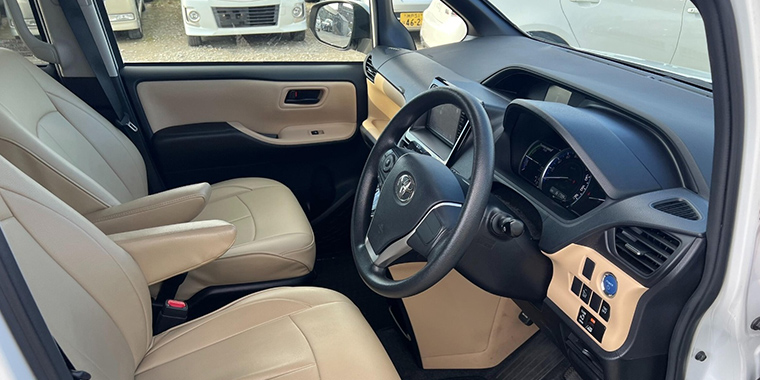
Beyond fuel costs, the true selling point of the Toyota Noah is its remarkable cabin layout. For families and business owners alike, the internal flexibility of this minivan makes it incredibly functional.
The low-floor design makes entry and exit effortless for elderly family members or young children. Dual sliding doors, which are frequently electronic on higher trim levels, allow passengers to climb in and out seamlessly even in tightly packed parking lots. Furthermore, the third-row seats can be folded flat or flipped upward against the side windows, transforming the vehicle from a comfortable passenger cruiser into a highly capable cargo carrier within minutes.
Exterior Design and Ground Clearance
Visually, the Toyota Noah embraces a boxy, tall-roof silhouette designed to prioritize interior room. While it may not look like a sleek sport utility vehicle, its bold front grille and modern LED lighting give it a sharp, professional road presence.
However, one major area of concern for Tanzanian buyers is ground clearance. The standard factory ground clearance sits around 150 mm to 160 mm. While this is perfectly adequate for paved highways and smooth city roads, it can pose a challenge when navigating rough dirt paths, steep speed bumps, or unpaved neighborhood streets. Many local owners choose to install mild suspension spacers to lift the vehicle slightly, protecting the undercarriage from unexpected scrapes.
Safety and Modern Tech Features
If you are buying a more recent generation of the Noah, you will benefit from highly advanced safety suites. Toyota’s focus on preventative tech provides immense peace of mind on unpredictable roads.
Modern imports typically feature Toyota Safety Sense, an active safety package that includes:
Pre-Collision System: Automatically detects vehicles or pedestrians ahead and applies emergency braking assistance to mitigate impacts.
Lane Departure Alert: Warns the driver if the vehicle begins drifting out of its designated lane without a turn signal.
Adaptive Cruise Control: Automatically adjusts your cruising speed to maintain a safe, pre-set distance from the car in front of you.
In addition to these high-tech driver aids, standard safety features like Anti-lock Braking Systems (ABS), Electronic Brake-force Distribution (EBD), and dual front and side airbags come standard to protect your passengers in the event of an accident.
Conclusion
All in all, the Toyota Noah remains one of the smartest vehicle investments you can make for family or commercial use in Tanzania. Its spacious interior, reliable parts availability, and robust resale value ensure a very satisfying ownership experience.
So, if your daily routes involve fighting heavy urban traffic jams, investing a bit more upfront for the 1.8-liter hybrid model will save you thousands of shillings in fuel over the long haul. On the other hand, if you regularly travel long distances on open highways, the conventional 2.0-liter gasoline engine offers an affordable powertrain that is easy to maintain locally. By carefully verifying the manufacturing year before purchasing online, you can secure an efficient, dependable van perfectly tailored to your lifestyle.