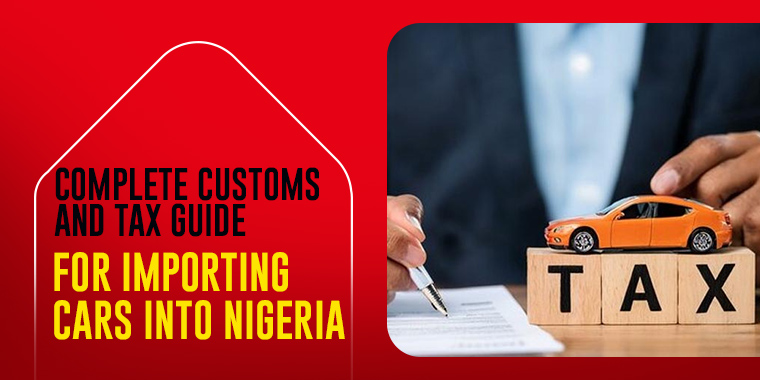
Buying a car internationally and shipping it home is an exciting milestone, but navigating the customs clearing process can feel overwhelming. Many buyers find a great deal on an auction site, factor in shipping costs, and assume they are ready to budget. However, when the vessel anchors at Lagos ports, unexpected duty surcharges, levies, and terminal fees often cause serious financial stress.
If you plan to import a vehicle, specifically a midsize sedan like the popular Toyota Camry 2019 Sedan, understanding the exact breakdown of customs taxes and statutory fees is essential. This comprehensive guide walks you step-by-step through Nigeria Customs Service (NCS) valuations, tax calculations, required documentation, and clearing logistics. The aim is to help you budget accurately and avoid costly delays at the port.
Why the Toyota Camry 2019 Sedan Remains a Top Import Choice

Before diving into the numbers, it helps to understand why the Toyota Camry Sedan dominates the Nigerian automotive market. The 2019 model year falls right into the sweet spot for vehicle imports: modern enough to feature advanced safety tech, active fuel efficiency, and high resale value, yet old enough to avoid the staggering luxury duties slapped on brand-new cars.
Under the hood, the standard 2019 Camry comes with either a 2.5-liter 4-cylinder petrol engine, a 3.5-liter V6 engine, or a 2.5-liter hybrid setup. As you will see later in this guide, engine size plays a critical role in determining your environmental taxes under recent tariff policies. Additionally, because Toyota parts are readily available across West Africa, importing this specific sedan guarantees low long-term maintenance costs once the car is fully cleared and on the road.
Key Terms You Must Know Before Calculating Import Duties
To calculate your total landed cost, you must first speak the language of shipping and customs valuation. Customs officials do not calculate tax based solely on what you paid for the car at an auction. Instead, they use standard legal benchmarks.
FOB (Free on Board): The actual purchase price of the vehicle at the source country's port, excluding international shipping and insurance costs.
Freight: The cost charged by the shipping line to transport your vehicle across the ocean to ports like Tin Can Island or Lagos Port Complex (Apapa).
CIF (Cost, Insurance, and Freight): The combined financial total of the car's auction price, maritime insurance, and ocean freight fees. Customs duty calculations use CIF as their primary baseline.
Surface Valuation (Ex-Factory Value): The official benchmark value assigned to a specific vehicle year and model by the Nigeria Customs Service, regardless of whether you bought the car at a discount.
Breakdown of Taxes, Duties, and Levies on Vehicle Imports
When clearing an imported vehicle through Nigeria Customs, your total invoice consists of several distinct stacked taxes and legal charges. Knowing each layer prevents surprise bills when your clearing agent sends you the final assessment.
1. Import Duty (20% of CIF)
The foundational charge applied to passenger vehicles imported into Nigeria under the ECOWAS Common External Tariff (CET) framework is an Import Duty of 20% on the vehicle's total CIF value.
2. National Automotive Council (NAC) Levy (5% of CIF)
The government imposes a National Automotive Council levy to support domestic automotive industrial policies. While brand-new vehicles carry a 10% NAC levy, imported used vehicles ("Tokunbo") pay a reduced 5% NAC levy on the CIF value.
3. Green Tax / Environmental Surharge (0% to 4%)
Introduced as an environmental measure, the Green Tax charges extra fees based strictly on engine displacement:
Under 2,000cc (2.0L): Exempt (0%)
2,000cc to 3,999cc (2.0L - 3.9L): 2% of CIF value
4,000cc and above (4.0L+): 4% of CIF value
Since the 2019 Toyota Camry features a 2.5-liter engine (2,494cc), it falls directly into the 2% Green Tax bracket.
4. Comprehensive Import Supervision Scheme (CISS) & ETLS
CISS Levy: A 1% administrative fee calculated on the vehicle's FOB value.
ETLS (ECOWAS Trade Liberalization Scheme): A mandatory 0.5% regional integration tax applied to the CIF value of all goods entering from non-ECOWAS member states.
5. Customs Surcharge (7% of Import Duty)
A common point of confusion is the 7% Port Development Surcharge. This percentage is not calculated on the overall CIF value. Rather, it is calculated as 7% of the Import Duty figure itself.
6. Value Added Tax (7.5% on Cumulative Total)
Finally, Nigeria's 7.5% Value Added Tax applies to the total sum of the CIF value plus all statutory duties, levies, and surcharges combined. Because VAT sits on top of every preceding charge, it represents a substantial portion of the overall duty bill.
Essential Clearance Documents Required at Nigerian Ports
Failing to present original, accurate documentation is the primary cause of clearance delays, storage penalties (demurrage), and potential seizure. Before your vehicle arrives at the port, ensure your shipping agency and foreign seller provide the following complete paper trail:
Original Bill of Lading (B/L): The official shipping document detailing vehicle ownership, port of loading, port of discharge, and chassis number (VIN).
Export Certificate / Foreign Title: Proves legitimate ownership in the origin country (e.g., USA Certificate of Title or Japanese Export Certificate).
Commercial Invoice & Packing List: Detailing the purchase price, VIN, engine size, trim level, and vehicle specifications.
Form M & Assessment Duty Notice (ADN): Electronic documents generated through the Nigeria Single Window Trade Portal for official customs declarations.
e-Valuation / VIN Valuation Printout: The official valuation assessment linked to your car's 17-digit Vehicle Identification Number.
Valid Identification: National Identification Number (NIN) or Tax Identification Number (TIN) of the consignee.
Additional Terminal and Local Handling Fees to Plan For
Your financial obligation does not end once the Nigeria Customs Service receives its tax payment. To clear the vehicle out of the port gates, you must settle local port authority and logistics charges:
Terminal Handling Charges (Demurrage & Storage): Paid directly to terminal operators for offloading, positioning, and storing the vessel container or RoRo shipment.
Shipping Line Agency Fees: Administrative documentation fees charged by carrier lines (e.g., Grimaldi, Maersk, or Hoegh).
Clearing Agent Professional Fees: The commission or agreed service charge paid to your licensed clearing agent for handling physical inspection and customs documentation.
Interstate Transport / Towing: Flatbed transport costs to haul your vehicle from the port gate to your final location safely.
All in all, budgeting an extra ₦300,000 to ₦600,000 above your customs assessment generally covers local handling, terminal charges, and agent fees, depending on port duration and carrier speed.
Practical Tips for a Smooth Customs Clearance Experience
To protect your investment and streamline your import process, keep these strategies in mind:
Verify the VIN Before Buying: Always run a history check to ensure the vehicle does not carry a stolen title or undisclosed flood damage that could stall clearance.
Work Only with Licensed Customs Agents: Ensure your clearing agent belongs to recognized professional bodies like ANLCA or NAGAFF. Never send payment to unverified third parties promising unrealistically low duty rates.
Double-Check Engine Specifications: Because engine size triggers higher Green Tax rates, confirm whether your chosen 2019 Camry is a 2.5L 4-cylinder or a 3.5L V6 before finalizing your purchase.
Track Customs FX Rates: Customs exchange rates fluctuate based on fiscal policy. Factor potential currency shifts into your final Naira budget while the vehicle is in transit.
Final Thoughts
Importing a Toyota Camry 2019 Sedan into Nigeria gives you access to a comfortable, reliable, and highly durable vehicle. However, achieving a stress-free import experience requires clear foresight into total landed costs.
By understanding how customs and tax fees work together, you eliminate surprises at the port. Plan, double-check your vehicle documentation, work with verified clearing professionals, and enjoy driving your car with peace of mind.