Buying a vehicle online is an incredibly exciting milestone, but it often comes with some level of anxiety. You spend hours browsing foreign auction sites, comparing mileage, and looking at pristine interior photos. Yet, as a smart buyer in Zambia, you know that the price tag you see online is not final. It is only the first part of the financial equation. The real question that keeps most buyers up at night is: What will it actually cost to clear the car when it arrives at the border?
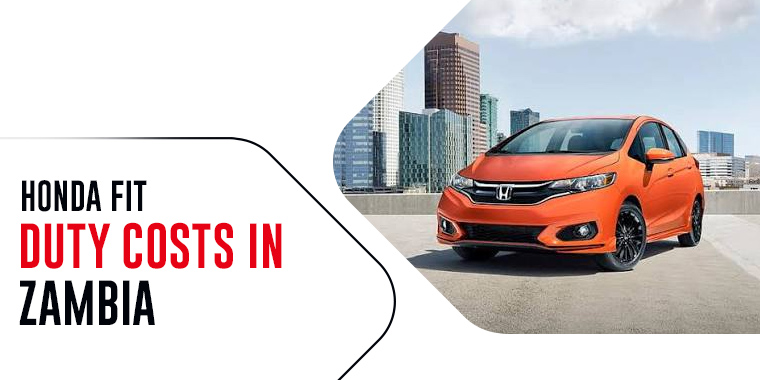
Among the most popular choices for Zambian drivers is the iconic, fuel-efficient hatchback. If you are currently looking into importing a used Honda Fit, understanding the Zambia Revenue Authority (ZRA) import duty and local compliance rules is vital to avoid surprises. Fortunately, Zambia uses a structured taxation system for used passenger vehicles. Thus, making it possible to calculate your expenses down to the exact Kwacha before you click buy. This detailed guide breaks down everything about import and compliance rules.
The Secret Weapon of Budgeting: Understanding ZRA Specific Duty
For many global car buyers, calculating import tax is a stressful guessing game. This is because many countries calculate duty purely as a percentage of what you paid for the car. If customs officials decide your online bargain was undervalued, they can hike up your taxes arbitrarily.
However, the Zambia Revenue Authority operates differently for standard used passenger cars. Instead of using the ad valorem method (a percentage based on the vehicle’s purchase value), the ZRA utilizes a flat-rate framework known as Specific Duty.
This flat-rate structure means that your tax depends on three set physical characteristics:
- The body type of the vehicle (e.g., hatchback, sedan, or SUV).
- The engine capacity is measured in cubic centimeters (cc).
- The age of the vehicle is from its year of manufacture.
Consequently, for standard petrol models, it does not matter if you bought your vehicle at a massive discount or a premium price; the baseline specific duty remains identical. Moreover, this flat-rate bundling makes budgeting predictable. It rolls customs duty, excise duty, VAT, the motor vehicle fee, the ASYCUDA processing fee, and the motor vehicle surtax into one single figure.
However, the flat-rate Specific Duty only applies to standard petrol/diesel engines. If you are importing a newer Honda Fit Hybrid, ZRA evaluates it using the ad valorem method (based on the Cost, Insurance, and Freight value).
How Vehicle Age Dictates Your Tax Bill
When it comes to lowering your clearing costs, the age of your vehicle is the most influential factor. The ZRA splits used imported vehicles into distinct age bands. In the eyes of customs, older cars actually attract higher relative environmental levies and specific duty tiers. This is to limit the influx of heavily polluting vehicles.
To ensure you don't incur massive clearance penalties, the ZRA categorizes vehicle age groups dynamically depending on the import year:
1. Vehicles Under 2 Years Old
Cars that are virtually brand new do not qualify for specific duty at all. Instead, they are evaluated using the traditional ad valorem method, where you pay a high percentage of the car's actual Cost, Insurance, and Freight (CIF) value.
2. Vehicles Between 2 and 5 Years Old
This is often considered an optimized sweet spot for buyers looking for modern features. Vehicles in this range strike an excellent balance between modern technology, lower wear-and-tear, and standardized specific duty.
3. Vehicles 5 Years and Older
Vehicles manufactured 5 or more years prior to the current year fall under Part II of the ZRA-specific duty tables. While they represent a flat fixed fee, they face structured environmental rates designed to discourage old emissions.
Core Vehicle Import Compliance Rules
Before importing a used Honda Fit model, you must ensure the vehicle complies with Zambian import standards. Failing any of these requirements can lead to heavy border penalties or seizure:
Auction Grade Limits: The vehicle must have an auction grade of 3 or higher. Vehicles falling into Grade 2, Grade 1, or R/RA (heavily damaged/accident history) are high-risk.
Flooding and Unrepaired Cars: Vehicles that have been subject to waterlogging, flood damage, or are shipped with unresolved, heavy structural damage are strictly not acceptable for importation into Zambia.
The 10-Year Age Limit Penalty: While Zambia does not enforce a strict age-based import ban like some of its neighbors, vehicles older than 10 years are hit with an extra surtax/damping fee (often up to 30% of the CIF value). Stick to models under 10 years old to escape this extra cost buffer.
Engine Number Verifications: Having a clearly legible, factory-stamped engine number is mandatory. If the engine number is missing from the deregistration paperwork or cannot be located physically on the block at customs, you will be penalized with a heavy fine.
Local Market Preferences (Resale and Heat): While not a statutory law, localized consumer trends matter. Highly preferable in Zambia, colors include silver and white due to dust concealment and heat reflection. Dark colors remain largely unpopular and yield poor local resale value.
The Compulsory Add-On: Carbon Emission Surtax
The baseline specific duty covers almost everything. However, the ZRA requires you to pay an additional environmental tax known as the Carbon Emission Surtax. This fee is a mandatory annual levy based entirely on your car's engine size. You must pay it at the point of entry.
For passenger vehicles with an engine capacity up to 1500cc, the carbon surtax is a flat K123.20.
Beyond the Border: Budgeting for Hidden Costs
A common mistake online car buyers make is assuming that the car's purchase price plus the ZRA duty represents the final cost. To ensure you drive your car home without financial strain, you must account for the auxiliary costs required to legally get the vehicle on Zambian roads.
Pre-Export Inspection (JEVIC / ZABS)
Zambia requires a mandatory roadworthiness inspection before the car leaves its country of origin. This is usually managed by JEVIC or equivalent bodies under the Zambia Bureau of Standards (ZABS).
While this inspection is technically required by law, some importers choose to skip it overseas. This is because the local border fines for non-compliance can occasionally end up being comparable to or lower than organizing overseas logistics. However, doing so risks border delays. If the car arrives at Nakonde or Dar es Salaam without it, expect to face local inspection penalties and costs.
Clearing Agent Fees
You cannot physically walk up to the customs desk and clear the vehicle yourself. You must hire a licensed customs clearing agent. Depending on the complexity of your paperwork and the specific border post, professional agent fees generally range between K1,500 and K5,000.
Port and Logistics Charges
Since Zambia is landlocked, your car will arrive via neighboring ports like Dar es Salaam in Tanzania or Durban in South Africa. You will need to budget for local port handling fees, transit border clearances, and freight transport. Driving the vehicle from the port to the Zambian border, or hiring a car carrier truck, will generally add between K3,500 and K7,500 to your overall budget.
RTSA Registration and Local Taxes
Once the vehicle safely crosses the border, your final step involves registering it with the Road Transport and Safety Agency (RTSA). You must allocate funds for physical number plates, fitness certificates, third-party insurance, and annual road tax. Altogether, these final statutory fees generally demand an extra K2,500 to K3,000.
Conclusion
All in all, importing a vehicle online via established platforms like SBT Japan is a brilliant path toward affordable car ownership. By arming yourself with the correct data and making sure your chosen Honda Fit matches auction grading, engine validation, and age restrictions, you transform a potentially chaotic clearance process into a smoothly executed business transaction. Take your time, cross-check compliance with your clearing agent, and look forward to the day your new vehicle arrives safely at your doorstep.