Choosing a new vehicle is rarely just about the specs on a glossy brochure. It is about how that car fits into the rhythm of your life. If you are navigating the world of online car shopping, you have likely narrowed your search to two titans: the Toyota RAV4 Hybrid and the Honda CR-V Hybrid. Both models have defined the compact SUV segment for decades, and for the 2026 model year, they are more refined than ever.
While both SUVs promise efficiency and reliability, they offer remarkably different personalities on the road. Consequently, the best choice depends heavily on whether you prioritize rugged capability and raw fuel economy or interior comfort and smooth driving dynamics. In this detailed comparison, we will break down everything from engine performance to cargo dimensions. This will help you decide which hybrid deserves the spot in your driveway.
Exterior Design: Rugged Grit vs. Urban Sophistication
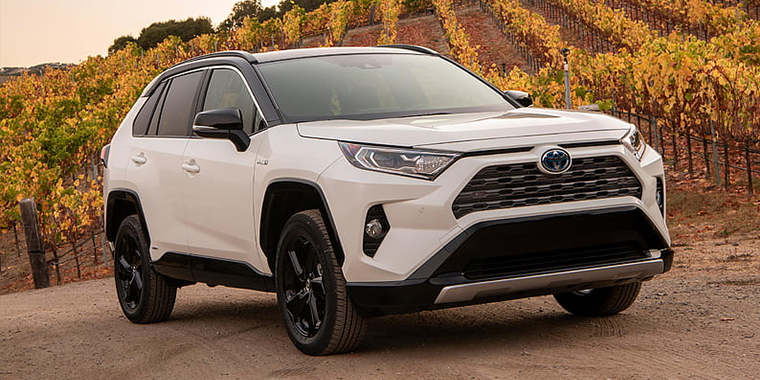
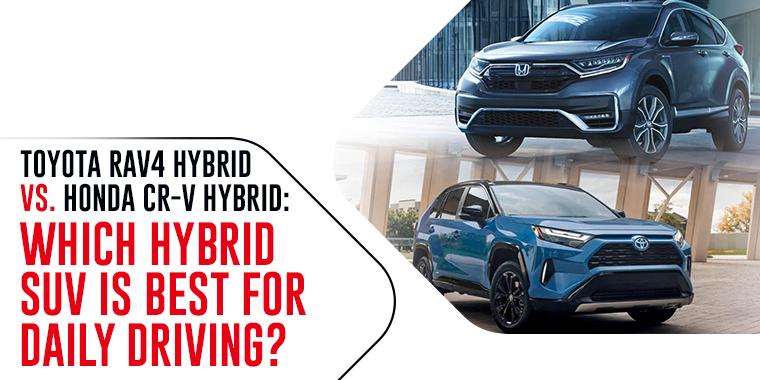
When you first look at these two vehicles, their design philosophies couldn’t be more distinct. The 2026 Toyota RAV4 Hybrid continues to lean into its "mini-Tacoma" persona. It features sharp, angular lines, a prominent hexagonal grille, and flared fenders that suggest it is always ready for a trailhead. For the current model year, Toyota has introduced a dual-face design strategy. The All-Wheel Drive (AWD) trims, such as the Woodland Edition, sport a more aggressive Adventure-style front end. However, the Front-Wheel Drive (FWD) models offer a cleaner, honeycomb grille for a more urban look.
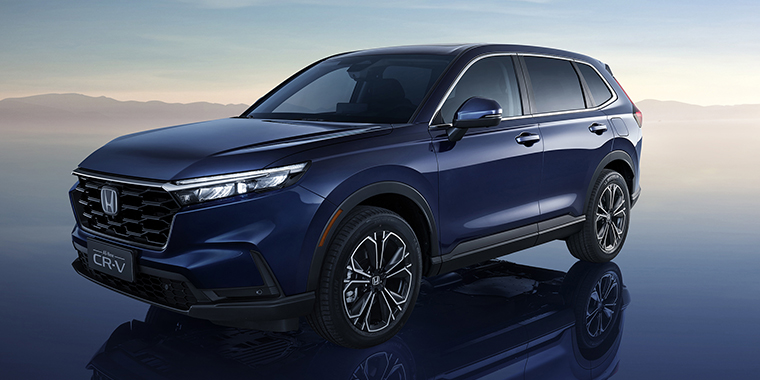
On the other hand, the 2026 Honda CR-V Hybrid opts for a more timeless, sophisticated aesthetic. It is noticeably longer than the RAV4, which gives it a sleeker, more planted silhouette. Honda uses a large, upright mesh grille and slim LED headlights to create a face that looks premium without being overly shouty. Therefore, if you prefer a vehicle that blends into a professional environment or looks at home in a city parking garage, the CR-V’s clean surfaces and dual chrome exhaust finishers will likely appeal to you. However, if you want your daily driver to look like it can handle a weekend mud run, the RAV4’s rugged posture wins every time.
Interior Comfort and Cargo: The Battle for Space
Inside the cabin, the differences become even more apparent, especially regarding how you and your passengers will feel during a long commute. The Honda CR-V Hybrid is widely considered the class leader for interior packaging. Because it has a longer wheelbase, it offers a massive 41 inches of rear legroom. This makes a significant difference if you frequently travel with adults or have tall teenagers. Furthermore, the CR-V’s interior design is remarkably cohesive, featuring a distinctive honeycomb metal mesh that hides the air vents and high-quality physical knobs for the climate control.
In contrast, the Toyota RAV4 Hybrid focuses on utility and chunky ergonomics. You will find large, rubberized grips on the dials and door handles, making them easy to use even with gloves. While the RAV4’s cabin is durable and well-built, it feels slightly more utilitarian than the Honda. In terms of cargo, the CR-V offers up to 39.3 cubic feet behind the rear seats, expanding to a generous 76.5 cubic feet when folded. The RAV4 is slightly tighter, providing 37.5 cubic feet with the seats up. While the difference is small on paper, the CR-V’s lower load floor makes it noticeably easier to slide in heavy groceries or strollers.
Engine Specs and Performance: Power vs. Refinement
The heartbeat of these SUVs is where the engineering philosophies truly diverge. For 2026, the Toyota RAV4 has gone exclusively hybrid, utilizing a 2.5-liter four-cylinder engine paired with the fifth-generation Toyota Hybrid System. This setup is a powerhouse, delivering a combined 226 horsepower in FWD and up to 236 horsepower in AWD configurations. Consequently, the RAV4 feels punchy and responsive when merging onto the highway. It also boasts a class-leading towing capacity of 3,500 lbs on certain trims, which is nearly triple what the Honda offers.
The Honda CR-V Hybrid takes a different approach. It uses a 2.0-liter engine paired with a two-motor hybrid system that produces 204 horsepower and 247 lb-ft of torque. While it has less horsepower than the Toyota, the Honda’s electric motors do more of the heavy lifting. This results in a driving experience that feels more like an electric vehicle: quiet, linear, and incredibly smooth. While the RAV4 can sometimes drone under heavy acceleration due to its e-CVT, the CR-V remains composed and hushed. If your daily drive involves a lot of stop-and-go traffic, you might find the Honda’s refined power delivery more relaxing.
Technology and Connectivity: Staying Plugged In
Toyota has made massive strides in technology for 2026, equipping the RAV4 with a standard 10.5-inch touchscreen, with a 12.9-inch unit available on higher trims. It runs on the new Arene software platform, which supports wireless Apple CarPlay and Android Auto. It also features a very responsive voice assistant. Additionally, the RAV4 offers a 12.3-inch fully digital gauge cluster that is highly customizable. For instance, it allows you to prioritize navigation or hybrid energy flow.
The Honda CR-V Hybrid keeps things a bit more traditional. It features a 9-inch touchscreen on most hybrid trims. While the screen is smaller than Toyota’s, Honda’s interface is famously intuitive, with a physical volume knob and a simplified menu structure. Top-tier Sport Touring trims add Google built-in, providing seamless access to Google Maps and the Play Store. Both vehicles offer wireless charging and multiple USB-C ports. However, the RAV4 takes the lead with its gadgets. It boasts a 1500W AC power outlet in the cargo area, perfect for powering a laptop or a small appliance during a camping trip.
Safety Features: Peace of Mind as Standard
Safety is a non-negotiable for daily drivers, and both manufacturers deliver in spades. The Toyota RAV4 comes standard with Toyota Safety Sense (TSS) 4.0. This latest suite includes a pre-collision system that can now detect motorcyclists. It also has a Proactive Driving Assist that provides gentle braking into curves. A standout feature for Toyota is the 360-degree Panoramic View Monitor, which makes navigating tight parking spots much easier.
Honda counters with the Honda Sensing® suite. It includes all the essentials: adaptive cruise control, lane-keeping assist, and traffic sign recognition. However, Honda’s Traffic Jam Assist is often cited as being smoother and more natural-feeling than Toyota’s equivalent, as it handles low-speed steering and braking with less ping-ponging between lane lines. Both vehicles have earned top safety ratings. However, the RAV4 provides a slight edge for those who want the absolute latest in sensor-based detection technology.
The Verdict: Which is the Best Daily Driver?
After comparing every detail, we can conclude that there is no bad choice here, but there is a right choice for your specific needs.
Choose the Toyota RAV4 Hybrid if:
- You want the best possible fuel economy (reaching up to 47-48 MPG in the city).
- You need to tow a small trailer or frequently drive on unpaved roads.
- You love a rugged, bold look and want the latest, largest infotainment screens.
Choose the Honda CR-V Hybrid if:
- You prioritize a quiet, smooth, and premium driving experience.
- You frequently carry passengers in the back seat and need maximum legroom.
- You prefer an intuitive, user-friendly interior with plenty of physical controls.
Ultimately, even a used Toyota RAV4 Hybrid is capable, efficient, and ready for anything. While, the Honda CR-V Hybrid is refined, spacious, and effortlessly comfortable. For most suburban daily drivers who value a peaceful commute and family-friendly space, the Honda CR-V Hybrid slightly edges out the win. However, if your daily life involves more adventure and a tighter fuel budget, the Toyota RAV4 Hybrid remains the king of the segment.