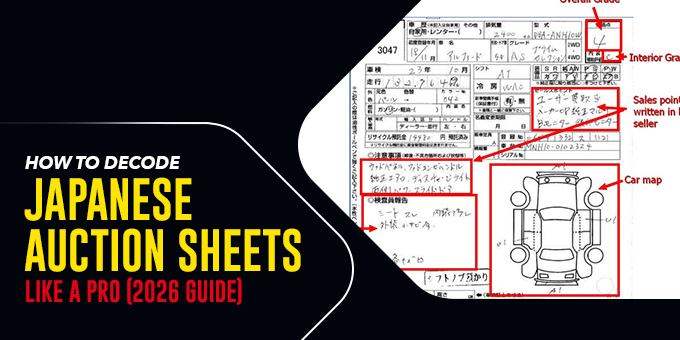
If you’re planning to import a used vehicle from Japan in 2026, the Japanese auction sheet is your best friend or worst enemy if you don’t know how to read it. This humble-looking document holds critical information about a car's condition, past use, and potential red flags. But don’t worry. By the end of this guide, you’ll be decoding auction sheets like a seasoned importer.
So, buckle up as we take a deep dive into the world of Japanese car auctions, one symbol and scribble at a time.
Why Auction Sheets Matter More Than Ever in 2026
First, let’s be blunt: auction houses do not intentionally hide problems. Yet, they compress a lot of reality into tiny boxes and symbols. Consequently, many importers treat photos as gospel and overlook the sheet. However, a properly read sheet tells you far more than photos alone, including prior repairs, paintwork, and the auction house’s honest take on condition.
Moreover, auction sheets let you compare apples to apples between different listings. Thus, they help you separate a rare find from a ticking maintenance time-bomb. In short, auction sheets are both forensic evidence and negotiation ammunition. Use them.
Anatomy of a Japanese Auction Sheet
Before jumping into decoding symbols and grades, let’s understand the layout of a typical auction sheet. While formats may vary slightly between auction houses like USS, TAA, or JU, most sheets include:
- Auction Grade
- Exterior/Interior Condition
- Mileage
- Model and Chassis Code
- Year of Manufacture
- Inspector Notes (often in Japanese)
- Repair History
- Auction House Remarks
- Vehicle Diagram (Damage map)
So, now let’s break these elements down.
The Auction Grade: Your First Glimpse into the Car's Story
The auction grade is usually the first thing buyers look at, and for good reason. It provides a snapshot of the vehicle’s overall condition. However, this grade isn't just a number; it's a context-driven rating.
Common Grades Explained
S: Practically new, often with delivery mileage.
6: Nearly new with minimal usage.
5: Excellent condition with very light wear.
4.5: Minor signs of usage, but still in great shape.
4: Good condition with visible but acceptable wear.
3.5: Average condition, may need minor repairs.
3 or below: Poor condition, expect considerable repairs.
RA or R: The car has had accident repairs.
A1 to A3, U1 to U3: Denote scratches and dents in increasing severity.
0 or Blank: Sometimes given to cars with unknown or poor-quality info.
Pro Tip: A 4.5-grade car with a clean diagram is often better than a 5-grade car with multiple small dents.
Mileage: What the Odometer Doesn't Always Say
Mileage on the sheet is in kilometers and is listed near the top. But here’s the catch: always verify if the mileage is guaranteed (indicated as "Jissoukou").
If you see “Soukou Fumei”, it means “mileage unknown,” which is a red flag. While some high-mileage cars are still mechanically sound, tampered odometers are not unheard of.
Therefore, watch out for extremely low mileage on an older vehicle. It may be too good to be true unless certified.
Inspector Notes: The Devil Is in the (Japanese) Details
This section is often written in handwritten Japanese, which makes it challenging for non-native readers. However, these notes can include:
- Engine noise
- Transmission issues
- Warning lights
- Non-functional features (e.g., A/C, radio, windows)
You can use translation apps or consult a bilingual agent for accurate interpretation. Better yet, some exporters provide translated summaries of the inspector’s comments. Still, don’t skip this part, it's gold.
The Vehicle Diagram: Reading the Damage Map
This section is where things get real. You’ll see a basic outline of the vehicle, often marked with codes that indicate damage types and locations. Here’s how to read it:
Common Symbols:
A1–A3: Scratch (1 = small, 3 = large)
U1–U3: Dent
W1–W3: Wave or panel distortion
S1–S3: Rust
C1–C3: Corrosion
XX: Panel replaced
X: Panel needs replacement
For example, “A2” on the right fender indicates a medium-sized scratch, while “XX” on the rear door suggests the door was replaced, likely due to an accident.
Expert Angle: Damage to bumpers is often cosmetic. But rust (S or C codes) should make you pause, especially if found on structural parts like the underbody.
Interior Condition: Look beyond the Seats
The interior is graded separately, usually with the letters:
A: Like new
B: Good
C: Average wear
D or E: Poor or heavily worn
Therefore, check for terms like:
Shimi = Stain
Tabako-shuu = Cigarette odor
Dousa Furyou = Malfunction
However, even if the car looks great on the outside, a C- or D-grade interior could mean it's a smoker’s car or one that wasn't well-maintained inside.
Repair History: Accidents and Alterations
This section is especially critical if you're seeking a clean title. Therefore, if a car has had significant accident repairs, it will be labeled as:
RA: Repaired Accident
R: Repaired frame
A: Accident history
***** (asterisk or special marks) **: Special condition, check inspector notes
Frame damage, replaced panels, or non-original parts can all affect resale value and roadworthiness.
Bonus Tip: Not all accident repairs are equal. For instance, a professionally repaired minor accident may be preferable to a poorly maintained non-accident vehicle.
Decode Hidden Details Using the Chassis Code
The chassis or model code (e.g., DBA-GG3S) can tell you everything from engine size to drivetrain. You can enter this code into manufacturer databases or exporter websites to confirm specs, fuel efficiency, and even recalls.
Many savvy buyers now cross-reference chassis numbers with online service records or maintenance logs in Japan to verify history.
Technology Tools to Help Decode Auction Sheets in 2026
In 2026, you don’t have to be a linguist or a car expert to understand auction sheets. There are several tools and services that you can use, such as:
AI Translation Apps: Google Lens, DeepL, and even ChatGPT can interpret Japanese handwriting with decent accuracy.
Auction Sheet Verification Services: Trusted exporters now offer third-party verifications with visual reports.
Vehicle History Apps: Platforms like CarVX or Japan Car History Check provide deeper insights using chassis numbers.
Pro Move: Use two or more tools together. Cross-verification reduces the chance of missing critical info.
What Most First-Time Importers Miss
The auction sheet is an important document. However, the following are the top things first-time buyers often overlook:
Non-Gradeable Issues: Navigation systems without English support, missing spare keys, old tires.
Smoker Cars: Hard to detect from photos. Therefore, interior notes are your best clue.
Underbody Rust: Check auction photos or request undercarriage images.
Misleading Clean Grades: A “4.5” car can still have a replaced panel, so it is essential to check the diagram.
Final Thoughts
To sum it up, learning to decode Japanese auction sheets may seem daunting at first, but once you understand the logic behind the grades, codes, and comments, it becomes second nature. And as vehicle exports from Japan continue to rise in 2026, being fluent in auction sheet language gives you a distinct edge, whether you're a private buyer or a professional importer.
As a result, make it a habit to look beyond just the grade. Consider mileage authenticity, inspect diagrams closely, and always read inspector notes (translated or not). All in all, combining this knowledge with trustworthy exporters and smart tools can help you get the best deals on the Japanese market.